

As India accelerates its clean-energy transition, the state of Tamil Nadu has taken a decisive step by opening a tender for one of the country’s largest standalone battery energy storage initiatives to date. The Tamil Nadu Green Energy Corporation (TNGECL) is seeking developers to deploy 1.5 GWh of battery energy storage systems (BESS) across seven substations, marking a significant push to stabilise a grid increasingly shaped by variable renewable generation.
While India has spent the past decade expanding solar and wind capacity at breakneck speed, large-scale storage has been slower to materialise. This new programme signals a shift toward integrating battery assets directly into grid planning—a trend that mirrors developments in Europe, where commercial and industrial energy storage (C&I ESS) has matured rapidly as system operators adapt to high renewable penetration.
A Structure Aimed at Bankability
The projects, to be delivered on a build-own-operate (BOO) basis, are eligible for viability gap funding through India’s Power System Development Fund. The financial support aligns with a wider pattern in emerging markets, where early large-scale storage projects often require public backing to overcome cost barriers and market uncertainties.
Each installation will deliver four hours of rated storage and operate at around 1.5 cycles per day—an unusually active duty cycle that reflects Tamil Nadu’s daily swings in renewable output. By securing a long-term battery energy storage purchase agreement (BESPA) with Tamil Nadu Power Distribution Corporation (TNPDCL), developers gain revenue predictability while the utility secures “on-demand” dispatchable capacity.
This arrangement is structurally similar to availability-based contracts used in European grid-support tenders. In practice, such models de-risk projects while ensuring system operators receive firm capacity during periods of grid stress.
Technical Requirements Reflect a Grid in Transition
The tender specifies a power rating corresponding to a 0.25 C-rate—common for long-duration grid assets designed to shift energy rather than simply provide fast frequency response. The requirement to allow flexible 25–50 MW blocks gives system operators operational granularity, enabling assets to respond precisely to dispatch instructions from Tamil Nadu’s load dispatch centre.
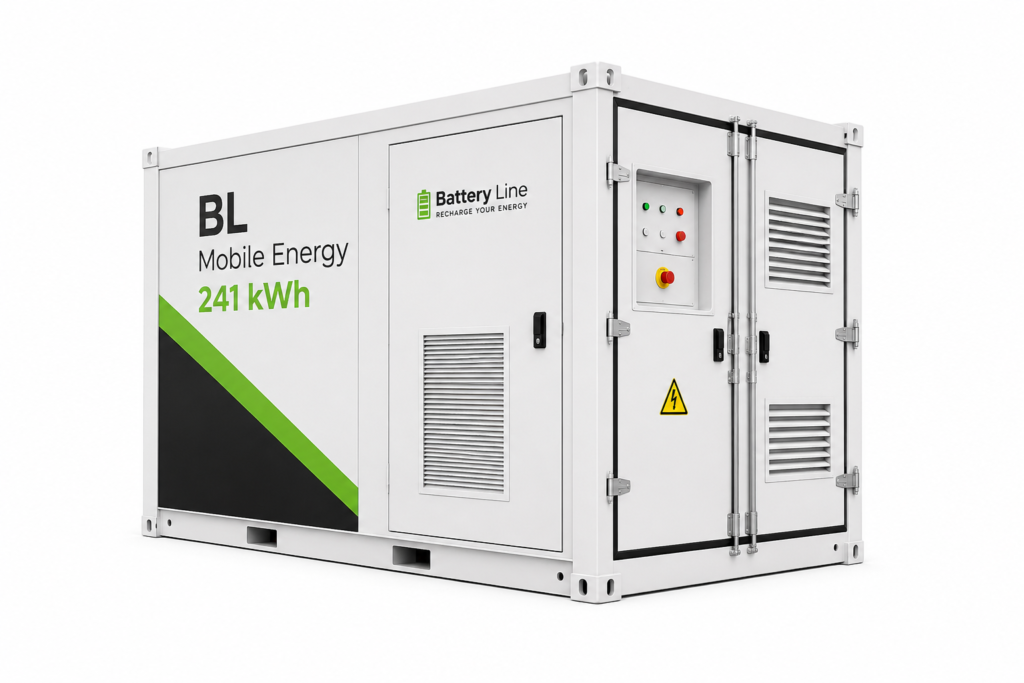
Minimum project size has been set at 25 MW/100 MWh, with bidders able to scale up in modular increments. This reflects the industry’s shift toward standardised, containerised BESS architectures that simplify procurement and shorten construction timelines.
From a European perspective, such system-design choices are familiar. They echo the specifications shaping long-duration storage procurement in markets like Italy, Spain, and the UK—where four- to six-hour C&I ESS solutions are becoming increasingly relevant for renewables integration and reserve displacement.
A Strategic Play in a Rapidly Renewable State
Tamil Nadu already ranks among India’s leading renewable-energy states, with a substantial portion of its electricity coming from wind and solar. During peak renewable periods—particularly the windy monsoon months—generation frequently outruns demand, forcing curtailment and complicating system management.
The new storage programme aims to turn that surplus into a strategic asset. By absorbing mid-day solar peaks or nocturnal wind surges and releasing energy during evening demand spikes, the seven BESS sites can help flatten the state’s load curve and reduce reliance on fossil-fuel backup.
As India’s national ambitions include 500 GW of non-fossil capacity by 2030, the Tamil Nadu tender could become a template for other states looking to pair renewable expansion with firmable battery capacity.
Why This Tender Matters for the Global Market
For global developers and manufacturers, India’s move is more than a domestic procurement event. It signals that large-scale battery energy storage—once concentrated in North America, Australia, and parts of Europe—is now emerging as a mainstream investment class in South Asia. The scale and technical design of the Tamil Nadu tender position it as a potential showcase for four-hour standalone BESS in fast-growing grids.
If the programme succeeds, it could stimulate broader investment in commercial and industrial energy storage applications, especially for factories and IT parks that suffer from localised grid constraints and could benefit from behind-the-meter C&I ESS solutions.
For Europe-based companies looking outward, India’s storage market may soon offer new commercial openings: equipment supply, EPC partnerships, digital optimisation platforms, and lifecycle services.
Outlook
Tamil Nadu’s 1.5 GWh storage initiative demonstrates how emerging markets are beginning to address the renewable integration challenge not with incremental adjustments but with large, system-level infrastructure. As costs decline and policy frameworks mature, battery energy storage systems are poised to play a central role in balancing India’s future power system.
With this tender, the state sets a benchmark—one that could accelerate the adoption of similar BOO-based storage programmes across the region and reshape how fast-growing markets think about grid reliability in an era of clean energy.